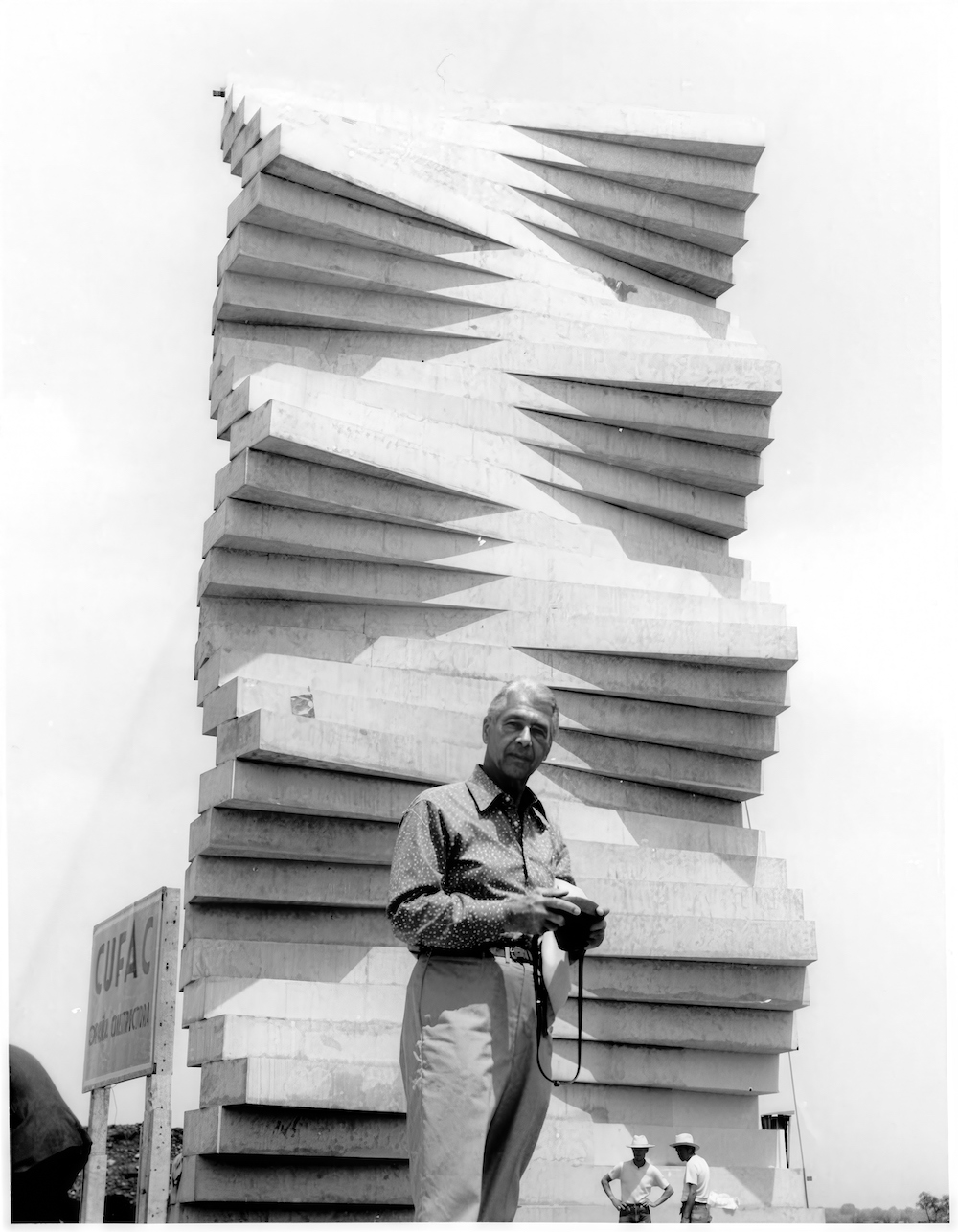
Herbert Bayer in front of Articulated Wall, 1968, Herbert Bayer Papers, Denver Public Library
Herbert Bayer’s 1968 Olympic Dream
"Articulated Wall" Promoted International Dialogue
As the world turns its focus toward the Milan Cortina 2026 Olympic Games, we look back at one of the most ambitious and unusual artistic legacies in Olympic history: Mexico City’s Ruta de la Amistad (Friendship Route) featuring Herbert Bayer’s Articulated Wall.
Conceived for the 1968 Summer Games by artist and architect Mathias Goeritz, this ten-mile stretch of the Periférico Sur highway, which at the time wound through quiet countryside, was meant to connect Mexico City, the Olympic Village, and Azteca Stadium. A total of 22 large-scale sculptures were commissioned from 19 artists and architects, including Uruguayan artist Gonzalo Fonseca, French artist Olivier Seguin, and American sculptor Alexander Calder. Strategically placed along the route, they were designed to be viewed by athletes and spectators traveling between major venues. Goeritz’s creative vision for the route was simple: all sculptures were to be abstract, monumental in scale, and employ concrete as their main medium. The Ruta was to be the largest sculptural thoroughfare in the world, offering new ways of navigating the capital while making art available to the masses and celebrating international dialogue at a time when the Cold War divided the world.
In addition to the nineteen sculptures placed along the Periférico Sur highway, three invitational works were commissioned for the grounds of specific Olympic stadiums. Sol Rojo (Red Sun) by Alexander Calder was located at the Azteca Stadium, Hombre Corriendo (Running Man) by Germán Cueto was placed at the Mexico Olympic Stadium, and Goeritz’s La Osa Mayor was constructed on the grounds of the Palaciío de los Deportes.
Ultimately, the project struggled to gain public favor in part due to the Tlatelolco Massacre, an event spurred on by a wave of student protests in the summer of 1968. On Oct. 2, 1968, just 10 days before the Summer Olympics was scheduled to open, police officers and military troops fired into a crowd of unarmed students, killing countless people and beating thousands of others. As a result, many Mexicans at the time felt that using the “Friendship Route” as a gesture of international peace was hypocritical and disingenuous.
In addition, Goeritz and Bayer’s rhythmic design for the Ruta (sculptures, spaced precisely along the highway, would be viewed from a car moving at 60 mph) failed due to explosive urban growth in Mexico City. The highway, once an efficient perimeter road, became gridlocked with cars. The Articulated Wall, meant to be viewed from the highway while driving, was suddenly engulfed in smoggy congestion and uncontrolled development.
For decades, as Mexico City expanded, these monumental works were forgotten, victims of neglect and vandalism. It wasn’t until 2000, when a freeway widening project sparked renewed interest, that these landmarks were rescued and restored. Articulated Wall, was relocated to the southern part of Mexico City (Tlalpan district) and is now part of a dedicated sculpture park across from the Cuicuilco Archeological Site as part of a preservation effort completed in 2013 by the Patronato Ruta de la Amistad, a privately funded group with a mission to protect the Ruta, and the World Monuments Fund.
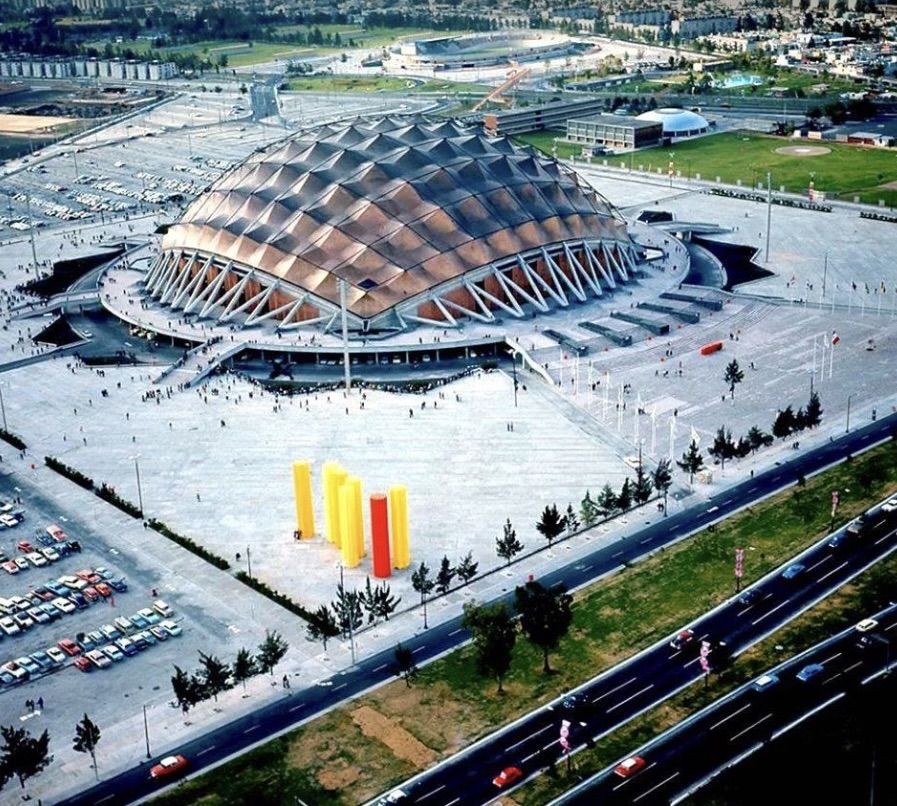
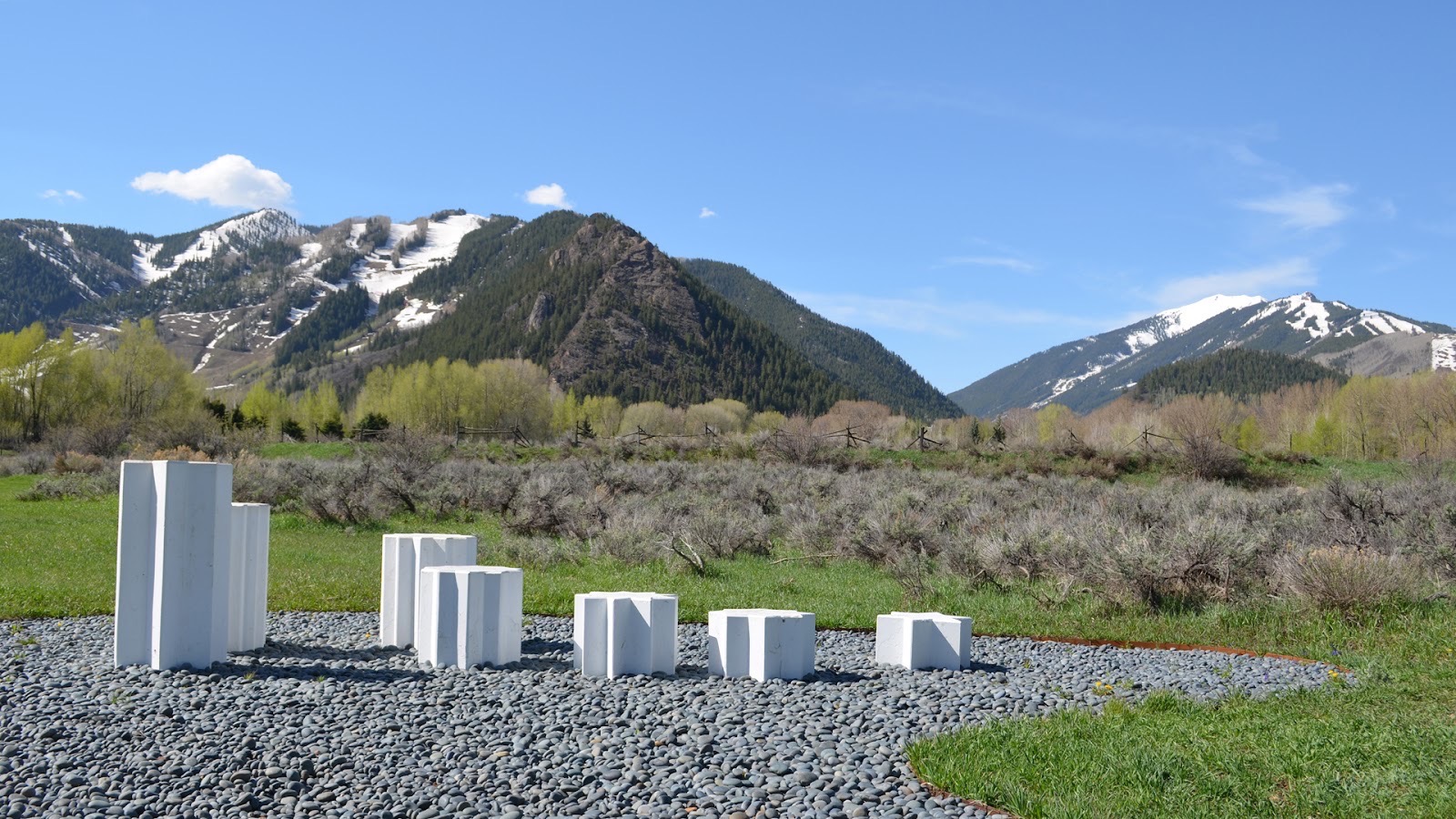
Goeritz's ‘La Osa Mayor’ (left) rises to a height of 15 meters, or almost 50 feet, outside the plaza of the former stadium. A colorful and enlarged duplicate of his ‘Big Dipper’ sculpture (above), located in Anderson Park on the Aspen Meadows campus, it consists of seven polyhedral concrete columns, six in yellow, and one in ‘Mexican’ pink.
Articulated Wall
Bayer was acquainted with Goeritz through other collaborations–in Mexico and in Aspen–including the Big Dipper sculpture in Anderson Park on the campus of the Aspen Meadows. As a result, he was invited by Goeritz to create a piece for display along the Ruta de la Amistad. Articulated Wall, a 53 ½-foot-tall concrete stacked concrete structure painted chrome yellow, stood out along the busy ten-mile route. Designed to be seen by motorists while driving, this monumental sculpture’s appearance changed constantly based on time of day, weather conditions, direction of travel and speed.
A second version of this iconic sculpture was constructed in the Denver Design District in 1985, its off-set horizontal beams (painted yellow, again) visible from Interstate 25 just south of downtown Denver. Its appearance, too, is subject to changing light and atmospheric conditions.
Sarah Shaw is Communications Manager for the Resnick Center for Herbert Bayer Studies.
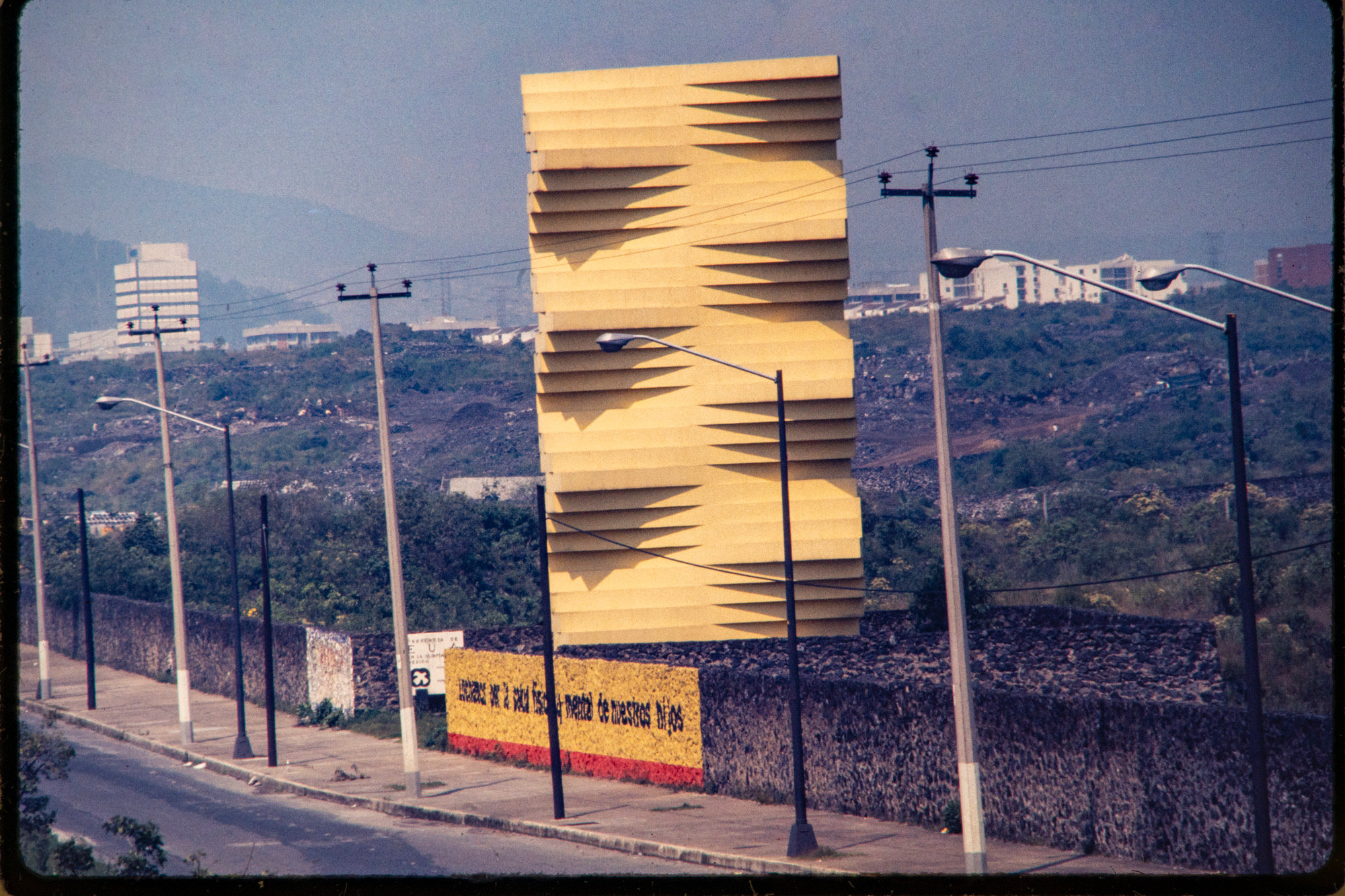
Mexico City, 1968. Height: 53 ft. 5 in.
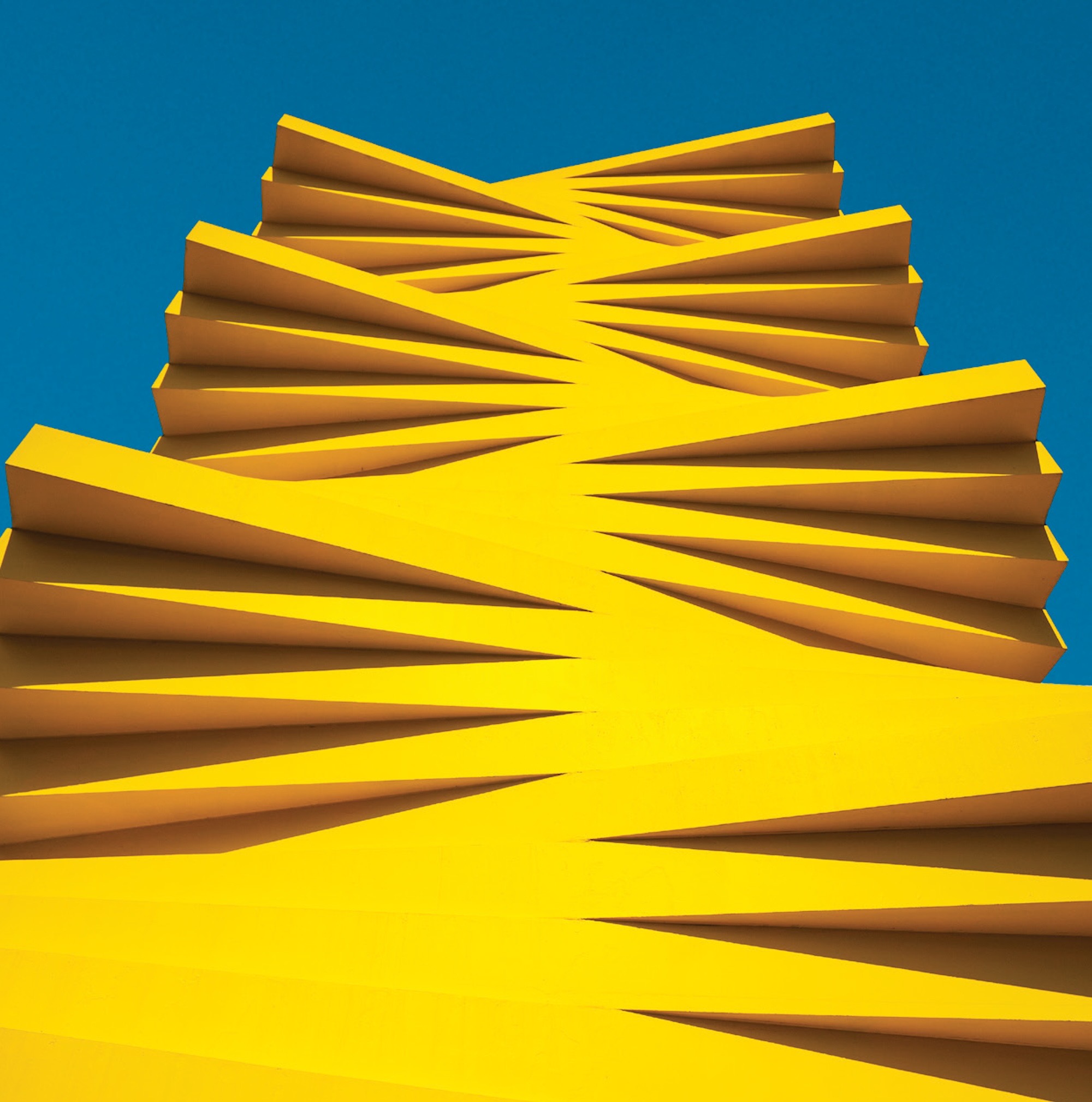
Denver, 1985. Height: 85 ft.
more