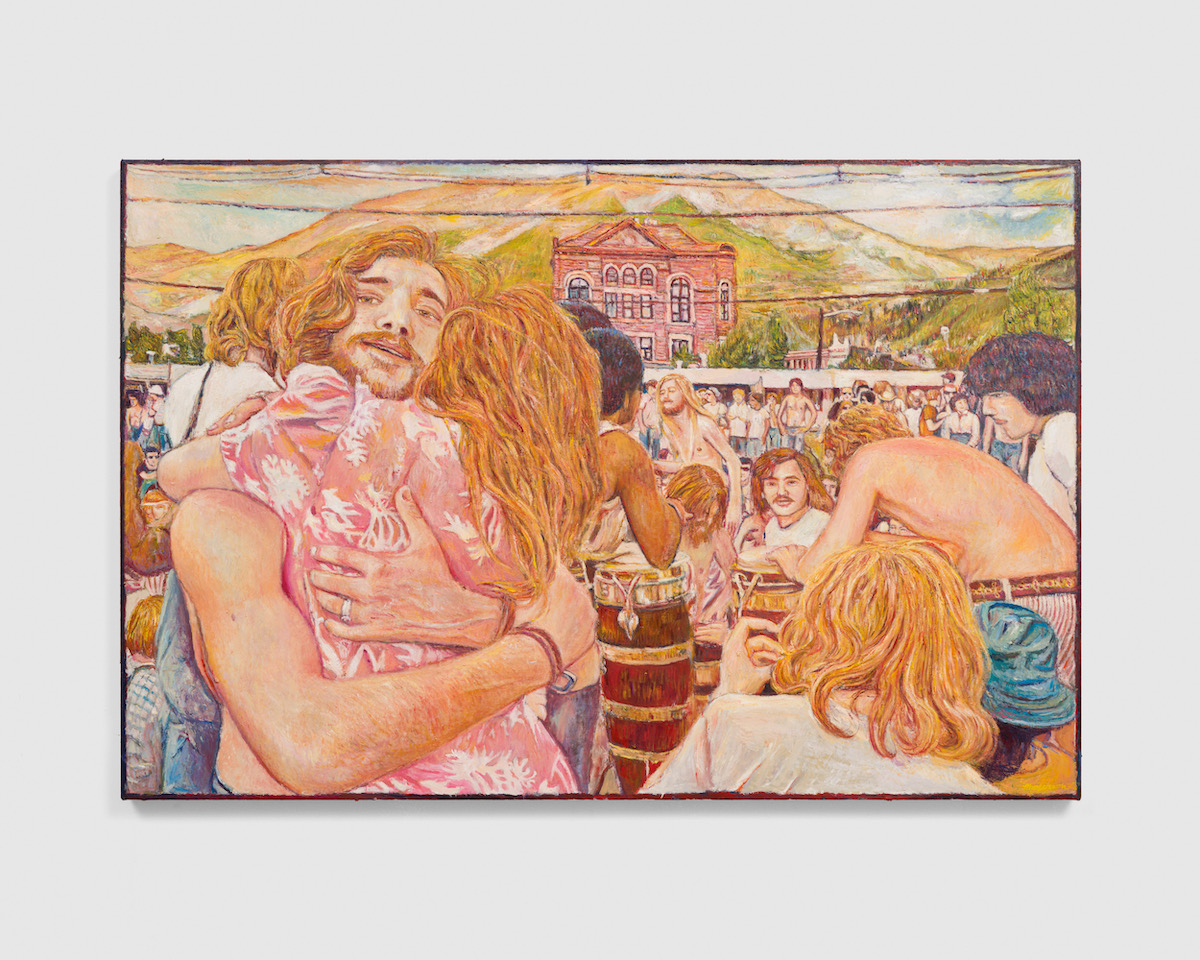
Keith Mayerson, Fourth of July, Aspen, Colorado, 1971 (After Henri Cartier-Bresson), 2025. Oil on linen, 28 x 42 in. © Keith Mayerson. Courtesy the artist and Karma
Aspen through the lens of Henri Cartier-Bresson and Keith Mayerson
How an Aspen Institute residency sparked an iconic 1971 photograph and a contemporary painter's response
By Andrew Travers
The globally influential French photographer Henri Cartier-Bresson turned his lens on Aspen in the summer of 1971, when the Aspen Institute hosted him as an artist-in-residence. During his time here, Cartier-Bresson took part in Institute seminars and led a workshop at the short-lived but impactful Center of the Eye. But the most lasting outcome of the residency is a series of extraordinary black-and-white images that Cartier-Bresson captured, using his groundbreaking street photography style to create images of Aspen and of travels around Colorado and New Mexico. He depicted the counterculture of Aspen, the Chicano Movement in Denver, reservation life of the Navajo Nation and scenes in-between.
Among these images is his 4th of July in Aspen, a photo of the Independence Day hippie gathering in downtown Aspen’s Wagner Park showing a couple embracing in the foreground while others dance and play drums in the background as the Wheeler Opera House and Red Mountain loom above them.
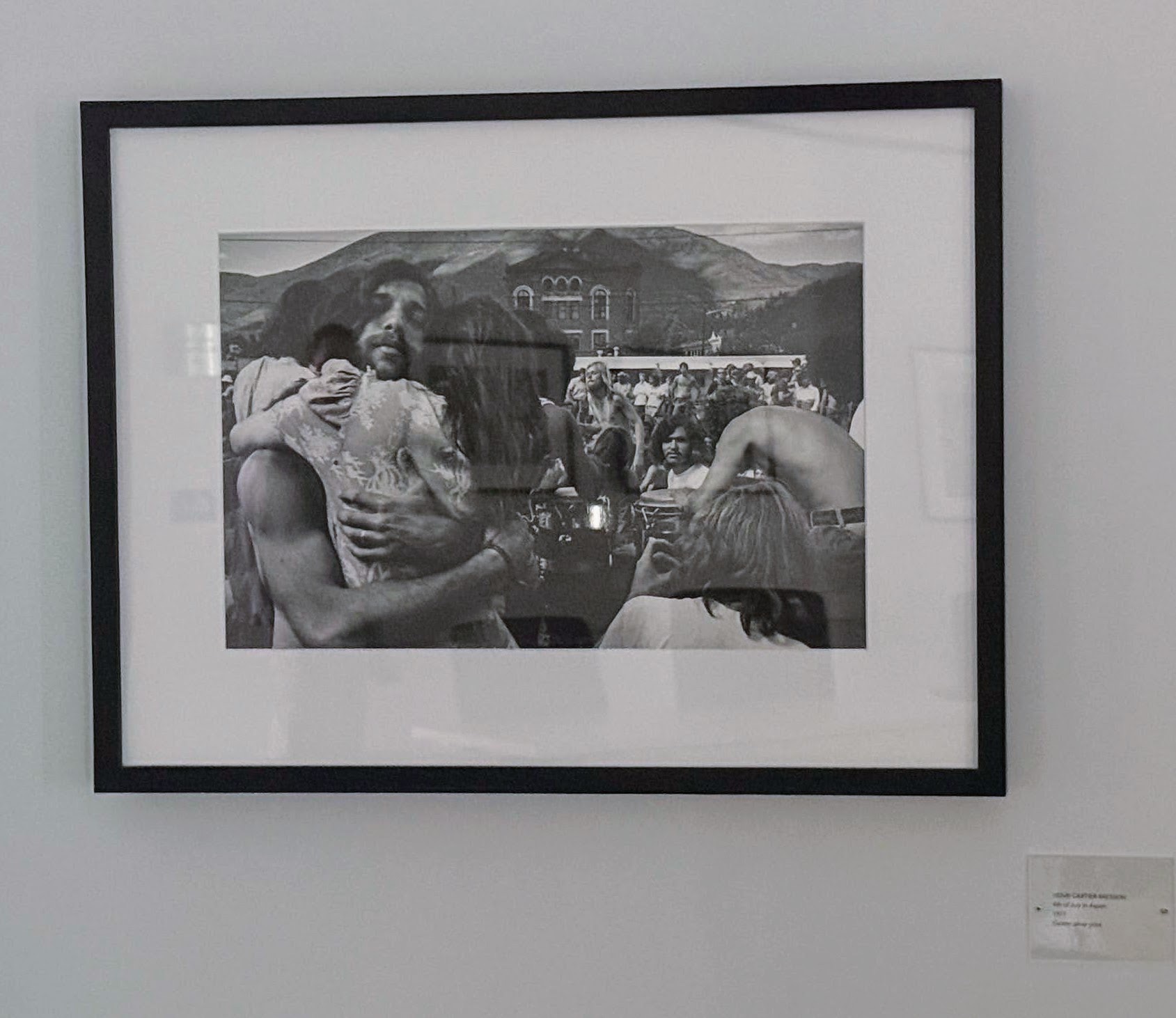
Henri Cartier Bresson, 4th of July in Aspen, 1971 in Harris Seminar Room, Aspen Institute. Credit: Lissa Ballinger
The image caught the eye of painter and illustrator Keith Mayerson last year, as Mayerson – who grew up in Colorado and is now based in California – was making a new body of work for the Aspen Art Museum. Mayerson used images of Aspen’s past as inspiration for a set of new paintings in his “My American Dream” series. The work, reflecting on his personal relationship to Aspen and the mountains, is on display at the Aspen Art Museum through May 31. Along with a John Denver album cover, a photo of locals gathered at the Red Onion, and a portrait of writer Hunter S. Thompson in his kitchen, Mayerson filtered the Cartier-Bresson image through his personal filter.
By Mayerson’s hand, Cartier-Bresson’s image was reimagined as Keith Mayerson’s oil painting Fourth of July, Aspen, Colorado, 1971 (After Henri Cartier-Bresson). At a March 21 walkthrough at the Aspen Art Museum, Mayerson explained:
When I appropriated the Henri Cartier-Bresson photograph Fourth of July, in Aspen, I was also reading books about the Aspen area, learning about the confluence of hippie encampments here. Beyond studying Cartier-Bresson, his history, strategies, and influences, I listened to the hit songs of 1971, both the pop that would have been playing on the radio and the music that hippies might have been loving and dancing to then. I remember seeing these people grace our world when I was five years old, and they still inspire me to envision freedom in the future and to bring my work to life with color using my painterly brush. Their perspective was an extension of the Aspen Idea.
Today, a silver gelatin print of the original Cartier-Bresson photo is on display at the Institute in the Harris Seminar Room, in the Herbert Bayer-designed Boettcher Building. It is one of thirteen Cartier-Bresson images from his Institute residency on display in the octagon-shaped meeting room and one of few non-Bayer collections on view on the Institute campus.
Andrew Travers is Senior Manager and Penner Manager of Educational Programs at the Bayer Center.
more