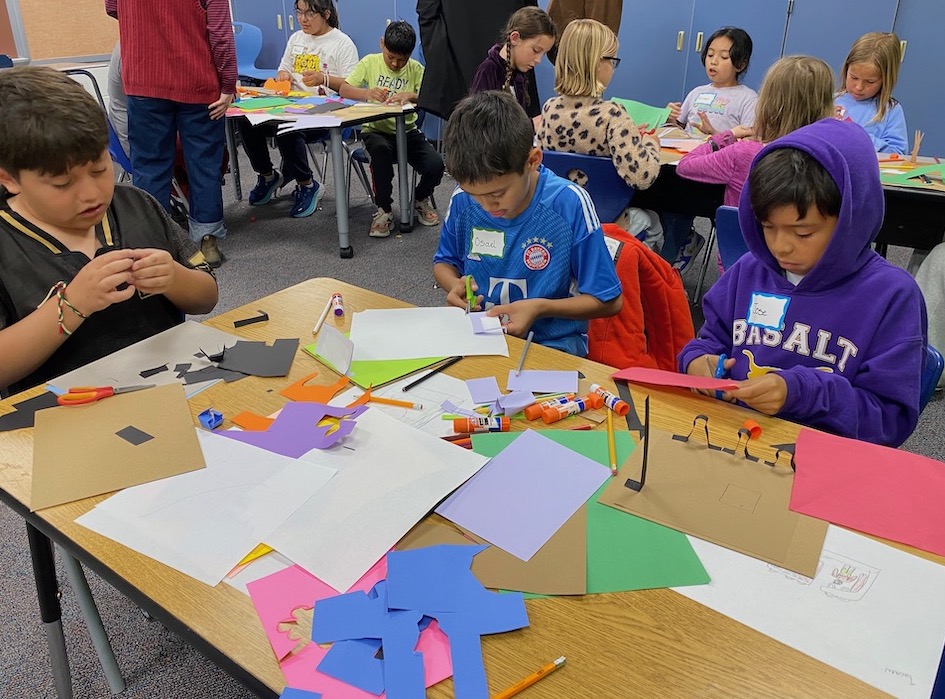
Students at Basalt Elementary School constructed three-dimensional paper models of their own Bayer-inspired environments during Basalt Art Days in the spring of 2026.
In the Museum, in the Classroom and Beyond
Looking back at the 2025-26 school year in Bayer Center educational programs
By Andrew Travers
In February, I stepped into a school gymnasium in Grand Junction, Colorado, and witnessed dozens of fifth graders sharing their own versions of pages from Herbert Bayer’s World Geo-Graphic Atlas. The all-school assembly gathered some four hundred K–8 students and teachers at Juniper Ridge Community School, serving as the culmination of a month-long geography unit on the US National Parks system. For the educational programs at the Resnick Center for Herbert Bayer Studies—then in the middle of our third academic year—the day was a milestone. It was a tangible manifestation of our hope that Bayer’s work could inspire modern creativity and curiosity within school curricula.
The day was a high point in the Bayer Center’s academic year, which concluded in May. This year, more than 1,100 students from kindergarten through college took part in Bayer Center programming, including field trips, workshops, and in-school initiatives.
The Juniper Ridge collaboration began in the spring of the 2024–25 academic year, sparked by Super Rad Art Days, an innovative Grand Junction-based nonprofit that brings student groups to the Bayer Center and the Aspen Institute campus for field trips and workshops. A follow-up field trip in November 2025 included a walk through the exhibition “Sculpting the Environment,” a tour of the campus, and an immersion in the “Charting Space” educational exhibition. This was followed by our “Geo-Graphic Stories” workshop, a program we have been running since the summer of 2023.
The workshop challenges participants to design their own atlas pages for a location of their choosing, utilizing the same visual storytelling tactics and graphic strategies that Bayer employed in his landmark atlas. I have led this workshop with numerous groups, including local and international youth, elementary through college students, and educators (including the entire faculty and staff of Roaring Fork High School during our Teacher Day in August 2025). It connects.
Following the Super Rad visit in November, Juniper Ridge teacher Naomi Barlow requested supplementary materials related to the atlas. She went on to build a month-long lesson plan and project using the “Geo-Graphic Stories” template for the entire fifth-grade. Each student chose a US National Park, researched its history, landscape, and wildlife, and created a Bayer-style page of visual storytelling designed to engage the viewer with data and illustrations.
“We were so inspired by the artwork and the storytelling in the atlas that I thought this would be a great project for the kids,” Barlow said. “They love it.”
Seeing their pages come to life, and watching the entire K–8 student body engage with them, was exactly what we’ve envisioned from the start of Bayer Center educational programs.
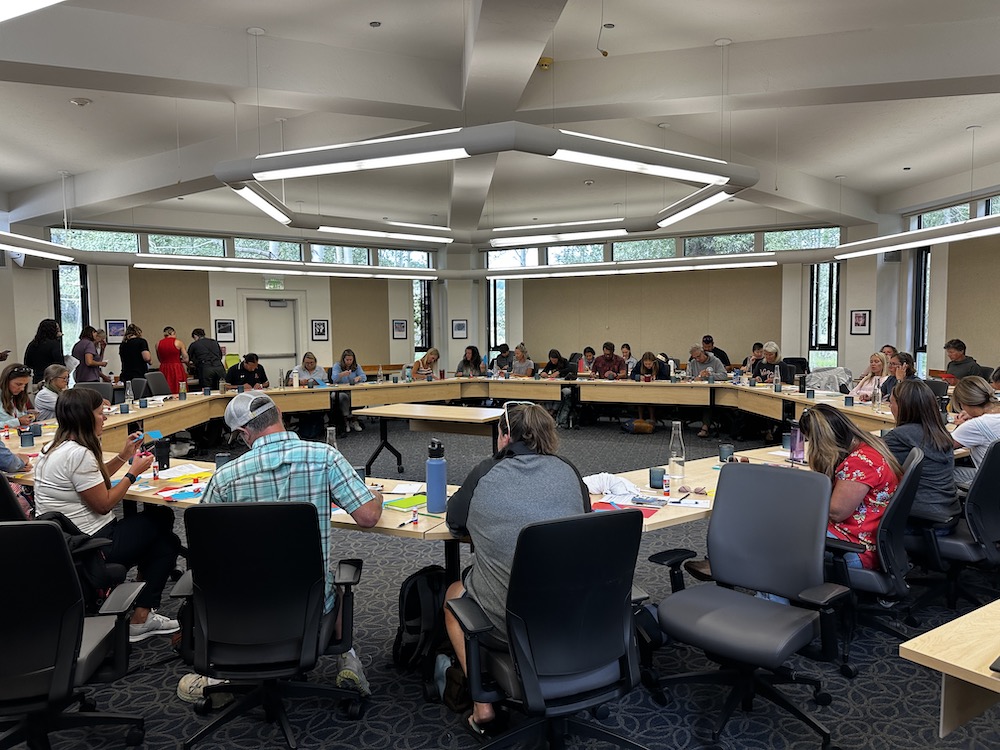
Roaring Fork High School teachers and staff participated in a Teacher Day workshop prior to the start of school in August, 2025.
A similar milestone arrived in May, when Aspen High School junior Hendrix Oppenheim – a participant in our Bayer Youth Design Cohort – was invited to present his design for a new campus field house to the Aspen School District Board of Education. He developed the project while immersed in Bayer’s world across six sessions with the Bayer Center, absorbing Bayer’s art, architecture, and Bauhaus design principles. The Cohort program, launched with six students during the 2024–25 school year, aims to use Bayer’s work to ignite potential in local high schoolers, challenging them to design new possibilities to improve their communities.
Watching Hendrix stand before the school board, explain how Bayer inspired him, and to see the district board take his ideas seriously realized another core Bayer Center educational ambition: using Bayer’s work to fuel the potential of young people, empowering them to drive positive change in their communities through design.
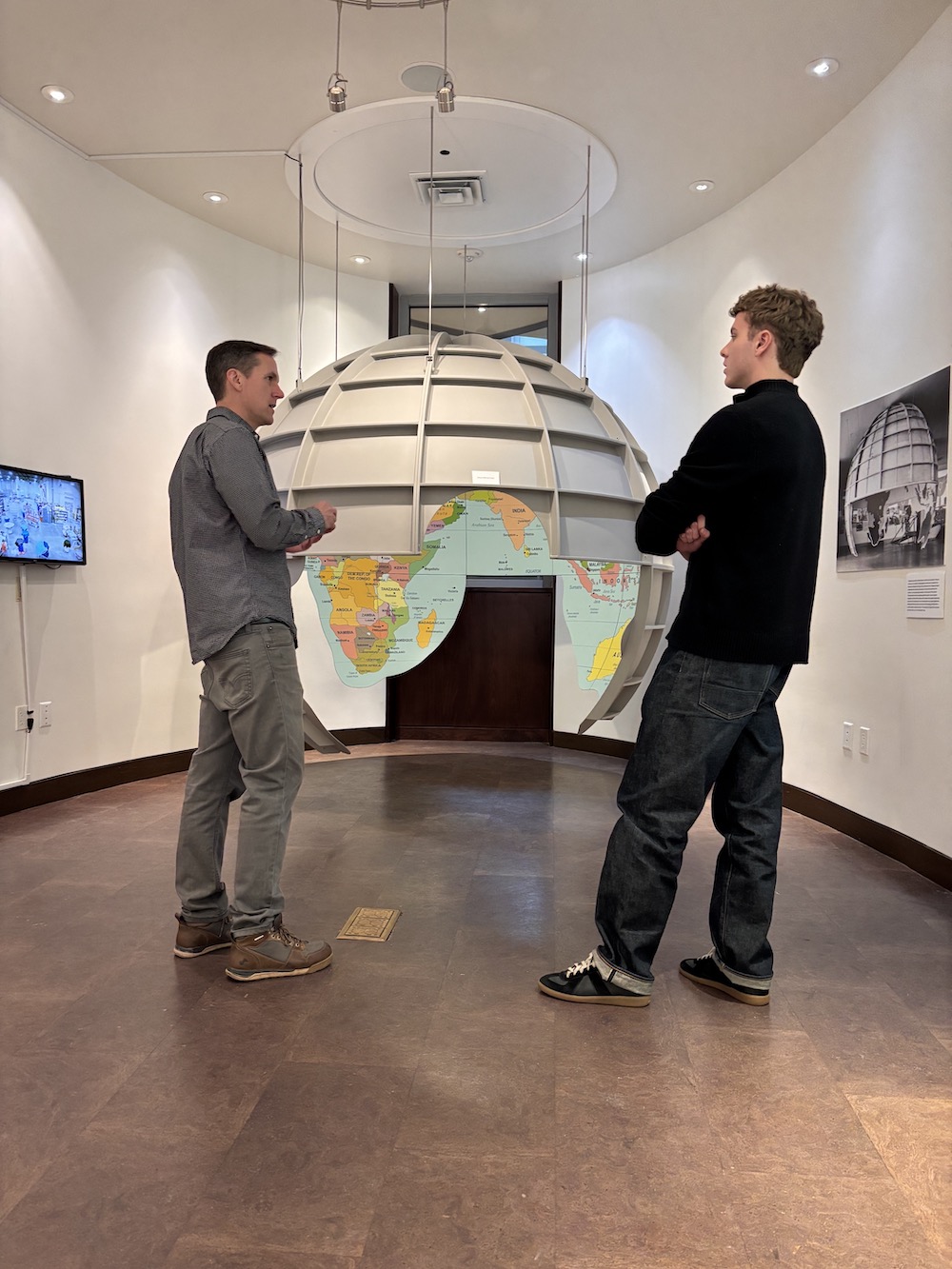
Andrew Travers and Hendrix Oppenheim discussed Bayer's 'Outside-In Globe' during a Bayer Youth Design Cohort session.
Bayer’s cross-disciplinary approach is a tremendous tool for educators. Because his work touches so many areas of inquiry, we can design programming to meet almost any group’s specific interests or curricula. This school year, teachers from a host of fields—including language arts, environmental science, and architecture—came here and infused Bayer’s concepts into their classrooms and utilized Bayer Center resources to inspire their students. For our youngest preschool visitors, spending time in the museum and on Bayer’s earthworks expands their conception of what an artist can do.
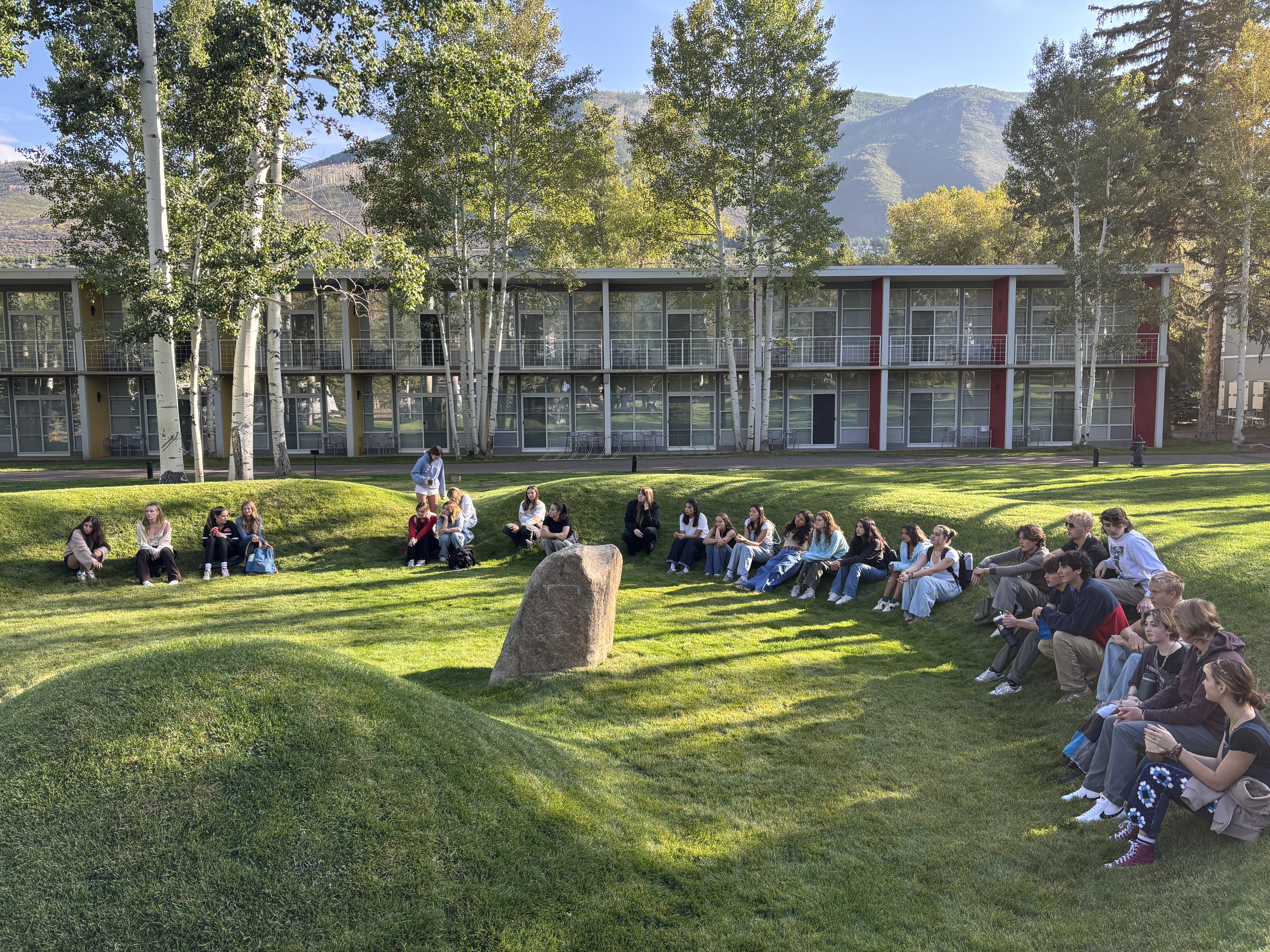
Students from Aspen High School gathered on the 'Grass Mound' during a campus tour in September.
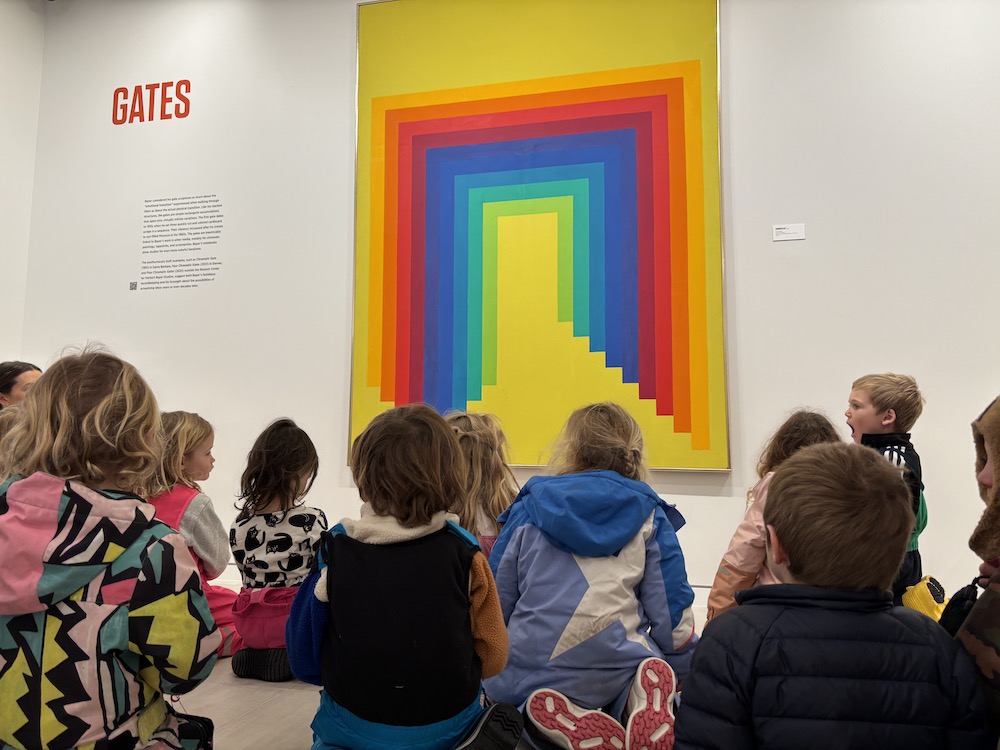
Preschoolers from the Wildwood School were particularly fascinated with Bayer's use of color.
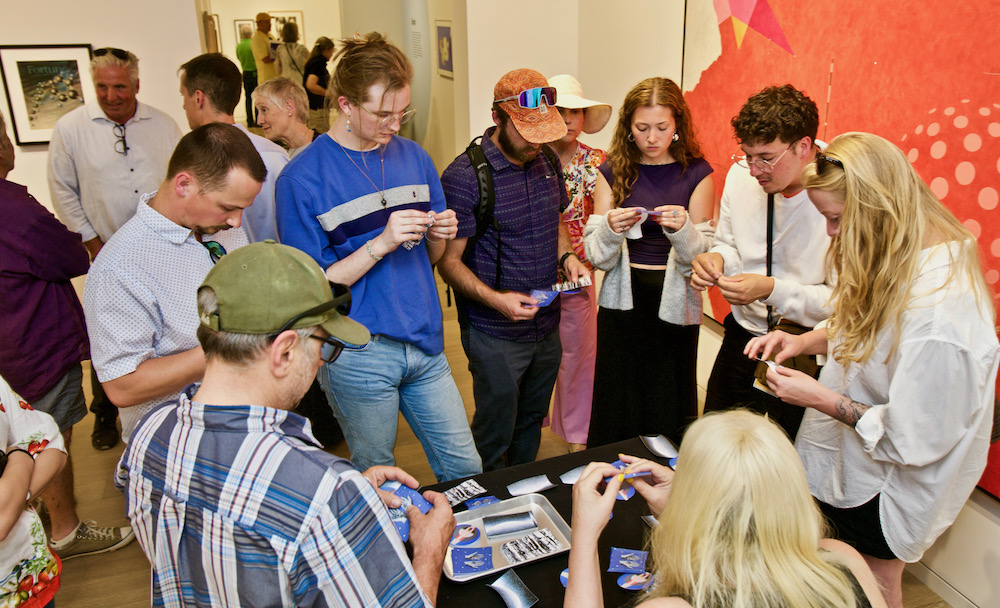
University of Colorado Denver's College of Architecture and Planning students participated in a paper folding exercise with Koko Bayer.
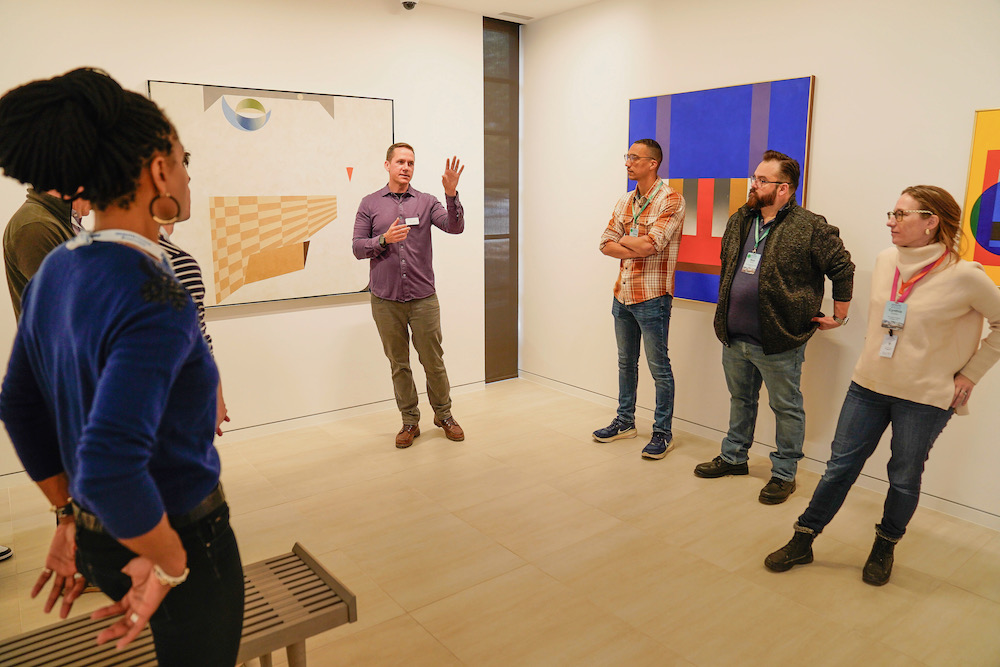
Andrew Travers spoke with Socrates Program participants about Bayer's design of the Aspen Meadows campus.
I also collaborated this school year with teaching artist Leah Aegerter to develop a workshop inspired by the 2025–26 exhibition “Sculpting the Environment: The Three-Dimensional Art of Herbert Bayer.” Using basic paper-folding techniques and drawing inspiration from Bayer works like Grass Mound, Anderson Park, and Walk In Space Painting, we challenged participants to construct three-dimensional paper models of their own Bayer-inspired environments.
We launched the workshop with students at the Resnick Youth Action Forum in the summer of 2025 and hosted school groups throughout the academic year, engaging 190 participants on campus. We then took the workshop on the road for five weekly sessions at Basalt Elementary School, reaching more than four hundred students across every grade level during the school’s Basalt Art Days in the spring of 2026.
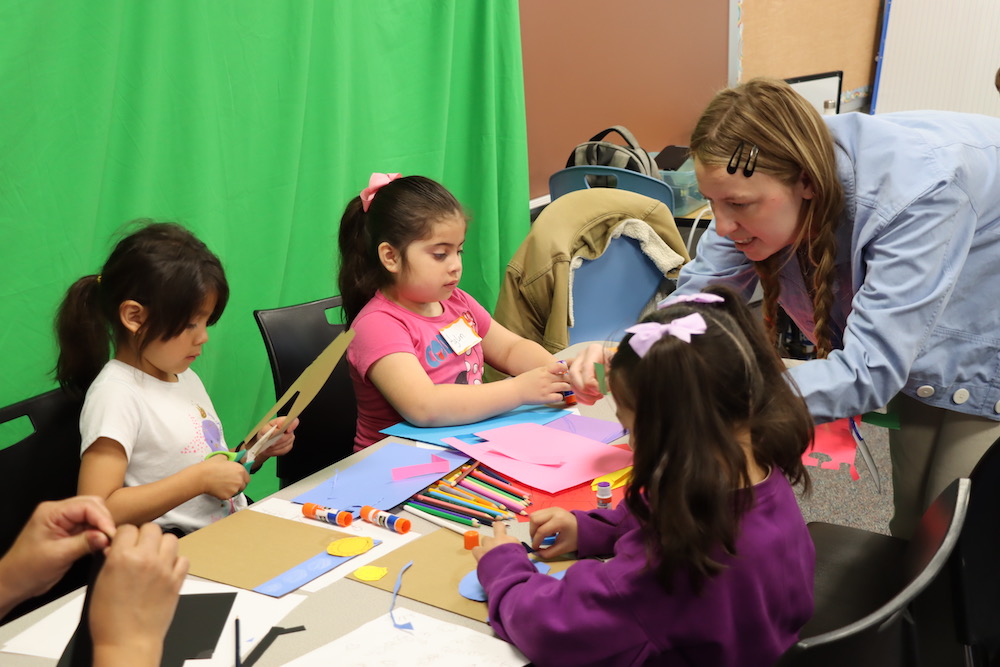
Gallery Operations Associate Jillian Jiampietro demonstrated paper folding techniques during Basalt Art Days.
Additionally, we hosted paper artist, “Sculpting the Environment” co-curator, and Herbert Bayer’s granddaughter, Koko Bayer, on campus for two evenings of adult paper-folding workshops. These sessions drew direct connections for local attendees between the foundational paper-folding techniques taught in the introductory course at the Bauhaus School and Bayer’s subsequent design of the Aspen Meadows campus and its buildings.
“It added depth and meaning to my experiences on campus,” one participant wrote in a post-workshop survey, “and out in the world, as I now look at the built environment differently.”
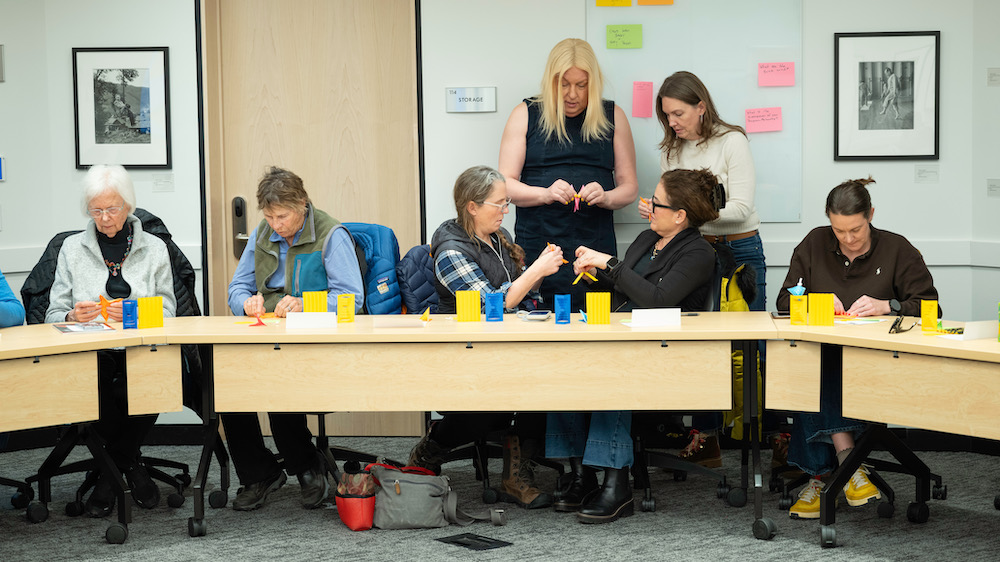
Folding Time with Koko Bayer, February 2026
In total, we hosted thirty-three school programs on the Aspen Meadows campus this school year alongside nine adult education programs. We sustained vital educational partnerships with organizations like the Aspen Art Museum and the Aspen Music Festival and School, as well as a wide variety of Aspen Institute programs and convenings. Concurrently, we cultivated new institutional partnerships, including collaborations with Colorado Mountain College and the University of Colorado Denver’s College of Architecture and Planning, which launched a three-week intensive Bauhaus/Aspen course this summer.
Looking ahead, we will launch a new workshop based on the exhibition “Double Take” at the Youth Action Forum this July. In the coming school year, we will continue to expand and strengthen our educational footprint. And all of us at the Center are looking forward to seeing what Bayer’s work inspires next.
Andrew Travers is the Senior Manager and Penner Manager of Educational Programs at the Resnick Center for Herbert Bayer Studies. Educational programming is funded by Laurie M. Tisch Illumination Fund.
more